
Dental Implants: Candidacy, Longevity & Implant vs. Bridge Options
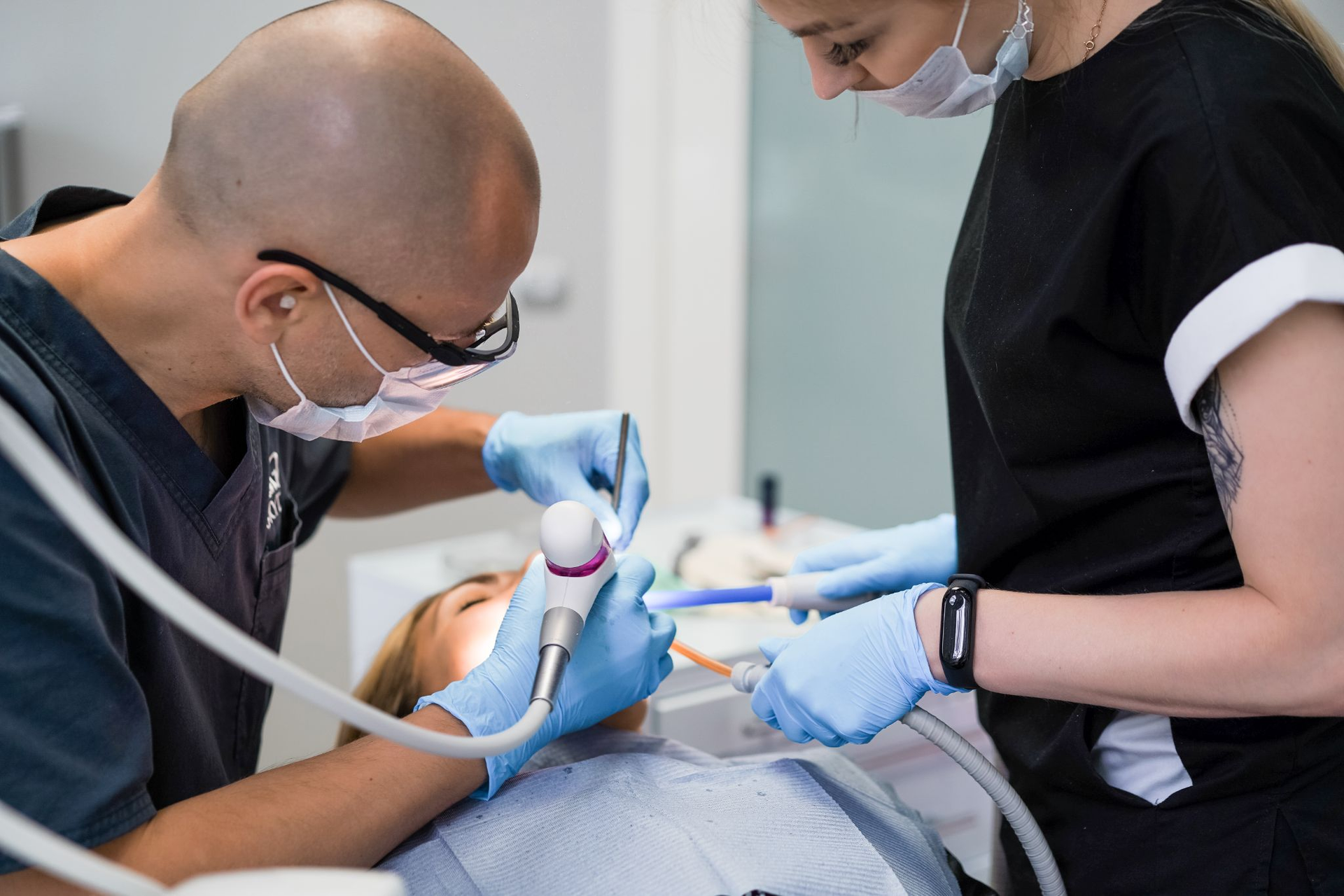
Dental implants can replace missing teeth and help bring back normal chewing and the appearance of a complete smile. But an implant isn't automatically the right choice for every person. The condition of the jawbone, gums, nearby teeth and the body's ability to heal all matter when planning treatment.
An evaluation gives a dentist a chance to check those factors before treatment begins. It can also help compare an implant with a bridge. Both can replace a missing tooth, but they work differently, and have different treatment requirements. Bone support, healing time, the condition of nearby teeth and ongoing maintenance can all influence whether a dental implant option makes sense.
Who is a good candidate for dental implants?
A good candidate for dental implants generally has enough jawbone to support the implant, healthy gum tissue and the ability to heal after treatment. Age alone doesn't determine whether someone can receive an implant.
An examination comes first. A dentist may check the jawbone, gums, bite and teeth around the missing tooth.
Imaging may also be used to see how much bone is available, and where an implant could be placed safely.
Bone loss can change the treatment plan. If there isn't enough bone for stable implant placement, a bone graft may be recommended before the implant is placed. Gum disease may also need treatment first because unhealthy gum tissue can make it harder to keep the area around an implant healthy.
Smoking is another factor to discuss. It can interfere with healing and may increase the chance of complications. Certain health conditions and medications can affect healing, too.
For someone considering a dental implant option after losing a tooth, an examination can answer a pretty basic question: is there enough healthy support for an implant?
How do dental implants replace missing teeth?
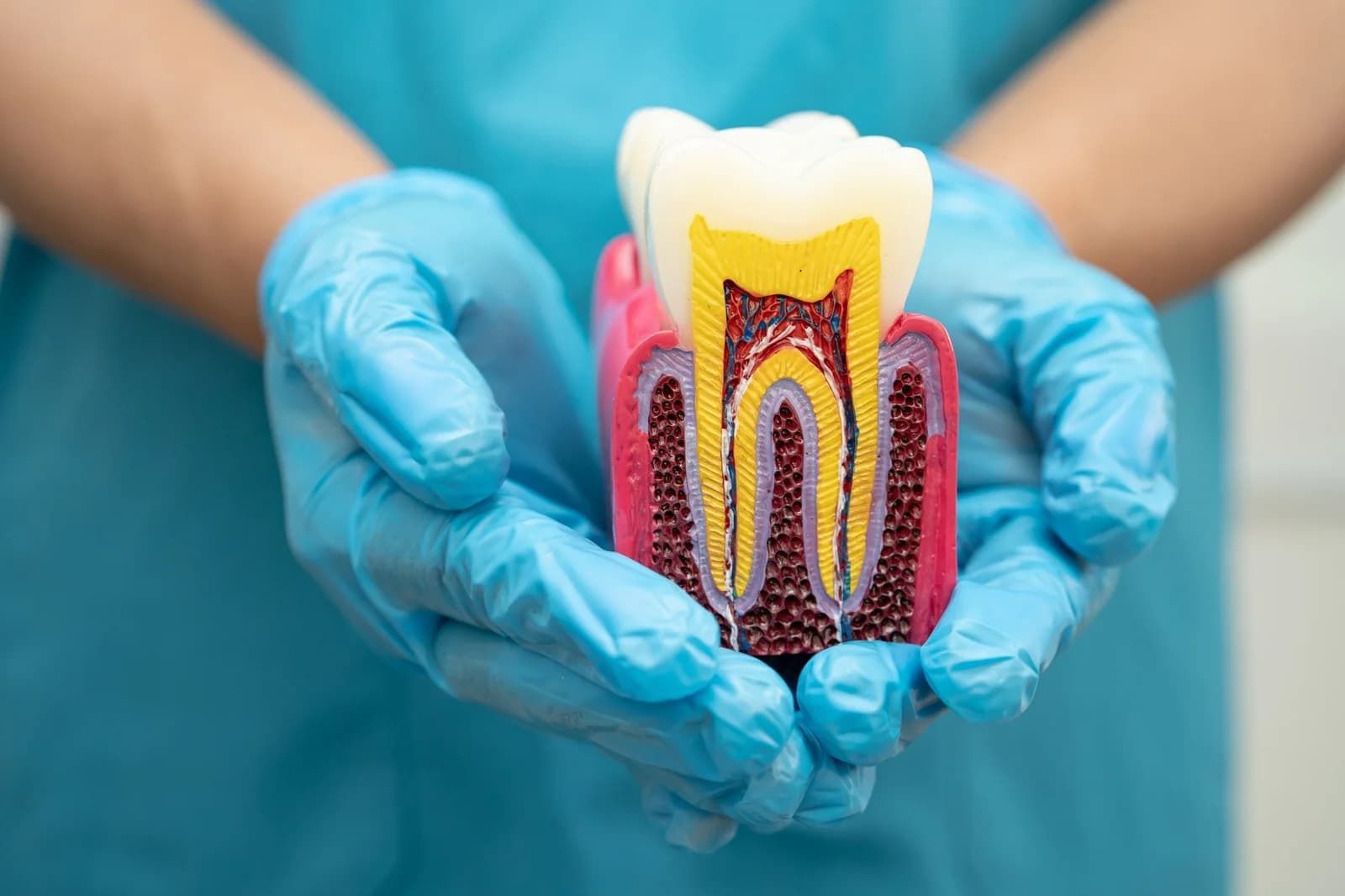
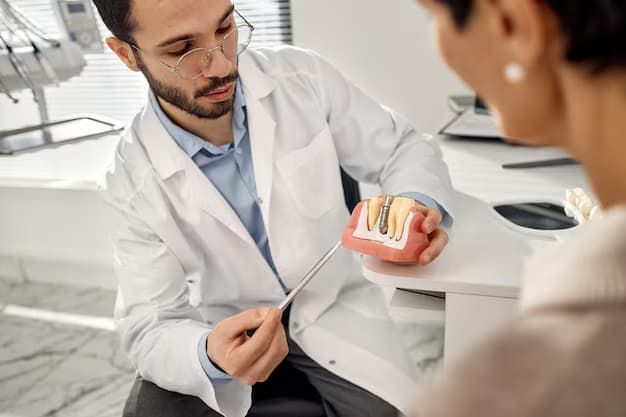
A dental implant replaces the root portion of a missing tooth. The implant post is placed into the jawbone and, after healing, supports an abutment and crown.
Treatment usually happens in stages. First, the area is examined, and planned with the help of dental imaging when needed. The implant is then placed into the jawbone. During the healing period, the bone gradually connects with the implant. This process is called osseointegration.
That healing period takes time.
Once the implant is stable, an abutment is attached and the final crown is made to fit the space and the person's bite. If bone grafting is needed the overall treatment timeline may be longer.
A dental implant option can replace one missing tooth or be part of a larger tooth replacement plan. A single implant has its own support in the jawbone while a traditional bridge relies on nearby teeth for support.
How long do dental implants usually last?
Dental implants can last 10–30 years or longer with proper care, although the exact lifespan varies by patient and oral health. The condition of the surrounding tissues, oral hygiene, restoration, bite forces and other factors can affect how long treatment lasts.
It's also useful to separate the implant from the crown.
The implant sits in the jawbone and serves as an artificial tooth root. The crown is the visible part that handles much of the chewing. A crown can wear, chip, or become damaged and may eventually need repair or replacement even when the implant underneath remains stable.
Daily care still matters. An implant can't develop a cavity in the same way as a natural tooth but the gums and bone around it can become unhealthy. Plaque buildup around an implant can contribute to inflammation and other problems.
Regular dental visits give the dentist an opportunity to check the implant, crown, bite, gums, and surrounding bone.
How do I choose between a dental implant and a bridge for a missing tooth?
The choice between an implant and a bridge depends on what the mouth can support and what the person wants from treatment. The condition of the missing tooth area, neighboring teeth, available bone, treatment timeline, and maintenance requirements all need to be considered.
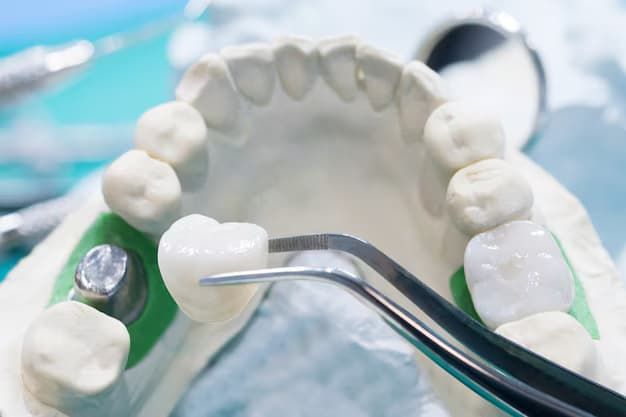
A dental implant is placed into the jawbone and supports its own replacement tooth. A traditional bridge fills the space by connecting a replacement tooth to supporting teeth beside the gap.
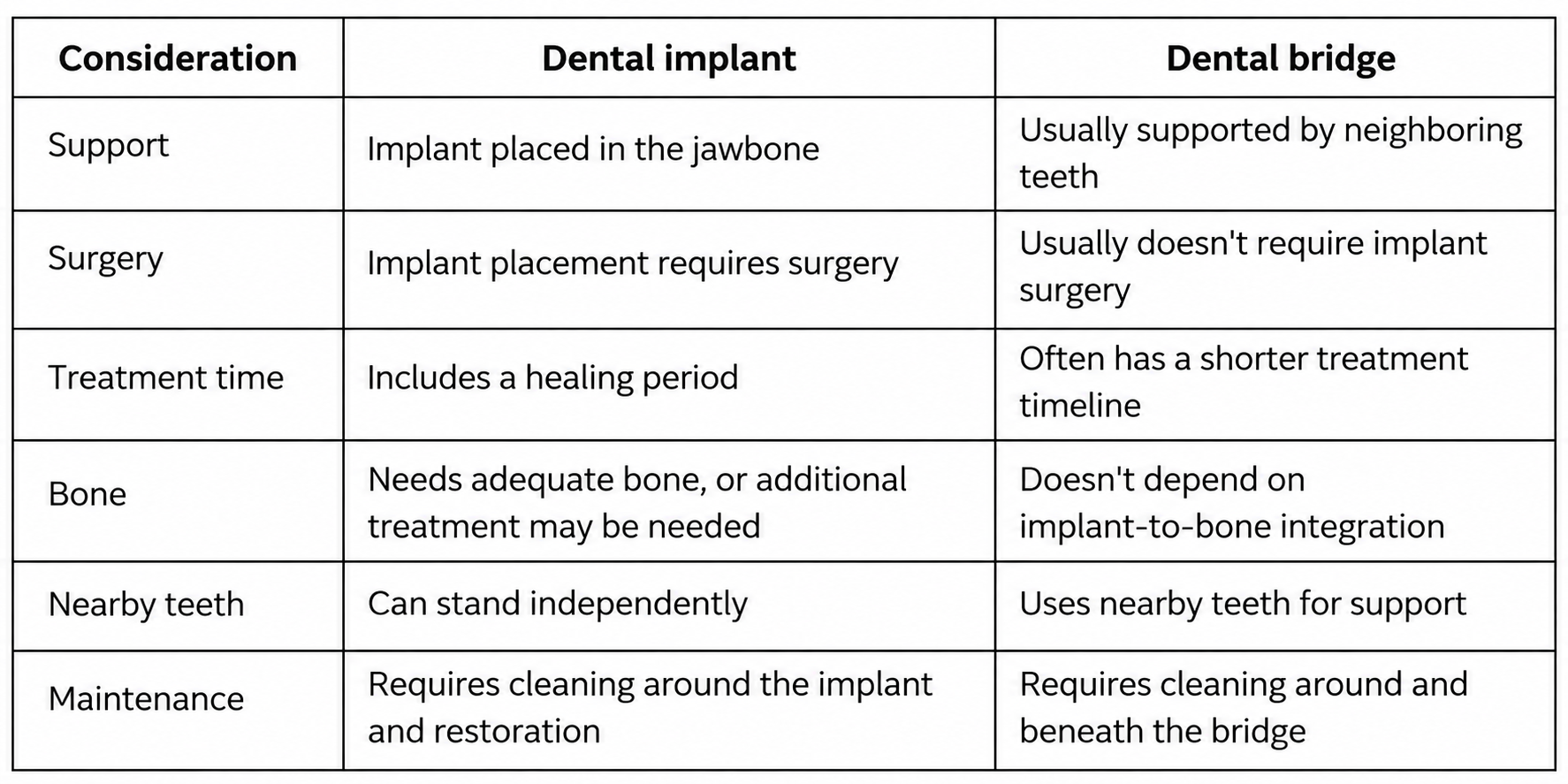
The differences can matter quite a bit.
A bridge may be considered when nearby teeth can provide suitable support. An implant may be considered when independent support is preferred and the gums and jawbone can support the treatment.
There isn't a shortcut here. An examination is what shows which option fits the condition of the mouth.
What can affect the success of dental implants?
Several factors can affect how well a dental implant performs over time. Bone quality and gum health matter, because the implant depends on the surrounding tissues for support. Oral hygiene, smoking, healing ability, and pressure from the bite can matter too.
Existing gum disease may need treatment before implant placement. If the gum tissue around the treatment area isn't healthy, it can create problems later. A dentist can check the gums and address any concerns before deciding whether a dental implant option is appropriate.
Daily cleaning is just as important after treatment. Food and plaque can collect around an implant crown, much like they can around natural teeth. Regular dental appointments allow changes around the implant to be noticed and addressed.
Bite pressure is another consideration. Someone who regularly clenches, or grinds their teeth may put more force on an implant crown than expected. A dentist can check the bite and discuss whether additional protection is needed. Small details can matter here.
What should I know before replacing a missing tooth?
The right tooth replacement option depends on the individual mouth. An implant may sound like the obvious choice for a missing tooth, but the decision still comes down to bone condition, gum health, nearby teeth, treatment time, maintenance, and long-term expectations.
For people considering dental care, an evaluation can make those choices easier to understand. A missing tooth doesn't automatically mean an implant is required. A bridge isn't automatically the better alternative, either.
At Glenlake Dental Care, we provide dental implant treatment which can also take different forms depending on whether one tooth, several teeth, or a larger section of the mouth needs replacement. The useful place to start is an examination of the whole area, not just the empty space. You may contact us at our office or call (847) 724 - 3969 for more treatment details.
Frequently Asked Questions
Are dental implants better than bridges?
Dental implants and bridges have different requirements so neither option is automatically better for every person. An implant gets support from the jawbone, while a traditional bridge relies on nearby teeth. Bone health, gum condition, treatment time, maintenance, and personal goals all affect the choice.
Can dental implants replace one missing tooth?
Yes. A single dental implant can replace one missing tooth. The implant acts as an artificial root and supports an abutment and crown. Adequate bone and healthy surrounding tissues are generally needed. If there isn't enough bone, additional treatment may be recommended before implant placement.
How long does the dental implant process take?
The dental implant process typically takes 3–6 months because the implant needs time to heal and connect with the jawbone. The exact timeline varies from person to person. Bone grafting or other preparation can add more time, while the final crown is generally placed after the implant has become stable.
Can dental implants fail?
Yes, dental implants can fail, although many remain functional for years. Failure can happen when an implant doesn't properly integrate with the bone or when problems develop in the tissues around it. Smoking, gum problems, poor oral hygiene, and excessive forces on the restoration can increase the risk.
Do dental implants need special care?
Dental implants need daily cleaning and regular dental visits. The implant itself can't develop tooth decay, but the gums and bone around it can become unhealthy. The crown can also wear or become damaged over time. Routine care helps protect the restoration and the tissues around it.
What should I consider before choosing an implant or bridge?
Consider the condition of the jawbone, gums, nearby teeth, treatment time, maintenance needs, and long-term goals. A dental examination can show whether an implant, bridge, or another tooth replacement approach is appropriate. People seeking dental care can discuss these factors with a dentist before choosing treatment.